The internet has become one of the most important technologies in modern society. People rely on it every day for communication, education, entertainment, business, and access to information. Despite its importance, many individuals use the internet regularly without fully understanding how it actually works.
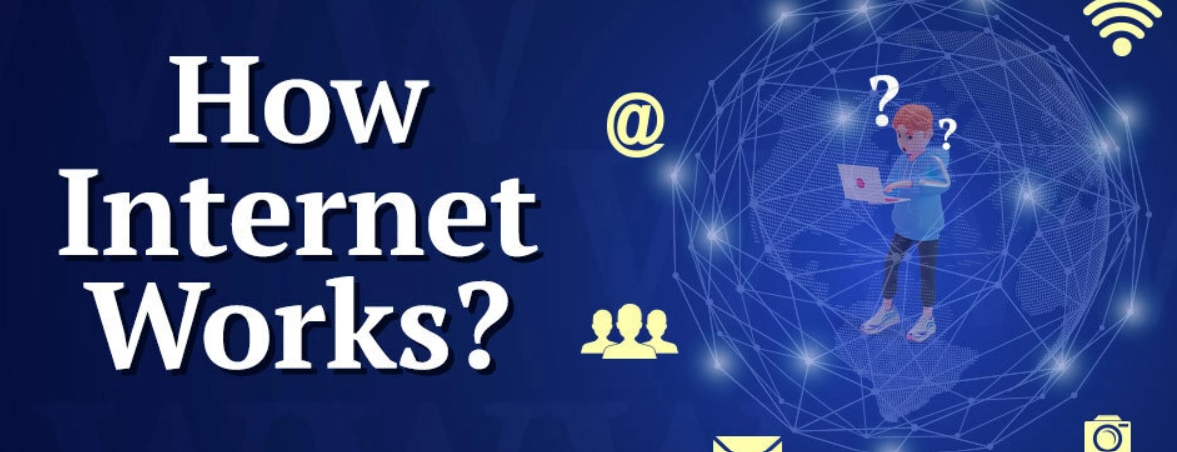
At its core, the internet is a global network that connects millions of computers and devices around the world. These devices communicate with each other to exchange data, allowing users to browse websites, send emails, stream videos, and interact online.
Understanding the basic principles behind the internet can help people better appreciate the technology that powers the digital world.
What Is the Internet?
The internet is often described as a network of networks. Instead of being a single system, it is a massive collection of interconnected networks that allow computers and devices to communicate with one another.
Each device connected to the internet — such as a smartphone, laptop, or server — becomes part of this global system. These devices exchange data using standardized communication rules known as internet protocols.
Because the internet connects networks across countries and continents, it allows information to travel almost instantly between distant locations.
How Devices Connect to the Internet
To access the internet, a device must connect to an Internet Service Provider (ISP). ISPs are companies that provide internet access to homes, businesses, and organizations.
Common examples of ISPs include cable companies, fiber providers, and mobile data networks.
When a device connects to the internet through an ISP, it receives a unique identifier called an IP address (Internet Protocol address). This address allows other devices on the internet to recognize and communicate with it.
Every website, server, and device connected to the internet also has its own IP address.
The Role of Servers and Clients
The internet operates using a system known as the client-server model.
A client is the device used by a person to access the internet, such as a smartphone or computer. When someone opens a website, their device sends a request to another computer called a server.
Servers are powerful computers designed to store and deliver information. Websites, images, videos, and applications are stored on servers located in data centers around the world.
When a user requests a webpage, the server sends the necessary data back to the user’s device, allowing the webpage to appear in their browser.
How Websites Are Found
Remembering the numerical IP address of every website would be extremely difficult for humans. To make the internet easier to use, websites are assigned domain names.
A domain name is the readable address people type into their browser, such as:
- google.com
- wikipedia.org
- amazon.com
Behind the scenes, a system called the Domain Name System (DNS) converts these domain names into IP addresses.
When a user enters a website address into their browser, the DNS system quickly finds the correct IP address and directs the request to the appropriate server.
How Data Travels Across the Internet
Data sent across the internet does not travel as one large piece of information. Instead, it is broken into smaller units called data packets.
Each packet contains a portion of the data as well as information about where it came from and where it needs to go.
These packets travel across different networks and routers before reaching their destination. Once all packets arrive, they are reassembled to recreate the original data.
This process happens extremely quickly, often within milliseconds, allowing users to load websites and stream videos smoothly.
The Role of Routers and Infrastructure
Routers play an essential role in directing internet traffic. A router is a device that determines the best path for data packets to travel across networks.
Routers communicate with each other to ensure that information reaches the correct destination efficiently. They help manage traffic across the vast infrastructure that supports the internet.
The internet’s physical infrastructure includes:
- Fiber optic cables
- Undersea cables connecting continents
- Data centers
- Satellites
- Wireless communication towers
Together, these technologies allow data to travel across the world almost instantly.
How Web Browsers Work
Web browsers are applications that allow users to access and view content on the internet. Popular browsers include Google Chrome, Mozilla Firefox, Safari, and Microsoft Edge.
When a user enters a website address, the browser sends a request to a server. The server then sends back files that make up the webpage, including:
- HTML (structure of the page)
- CSS (design and layout)
- JavaScript (interactive features)
The browser processes these files and displays the webpage in a format that users can easily read and interact with.
Internet Security and Encryption
Security is an important part of the modern internet. Because sensitive information such as passwords, credit card numbers, and personal data travels across networks, encryption is used to protect it.
Many websites use HTTPS (Hypertext Transfer Protocol Secure), which encrypts data during transmission. This encryption prevents unauthorized parties from intercepting or reading the information.
Cybersecurity tools such as firewalls, antivirus software, and secure authentication methods also help protect users from online threats.
The Future of the Internet
The internet continues to evolve as new technologies emerge. Faster networks such as 5G and fiber optic connections are improving internet speeds and reliability.
The growth of cloud computing, artificial intelligence, and the Internet of Things (IoT) is also expanding the role of the internet in daily life. Smart devices, connected homes, and digital services rely heavily on internet connectivity.
As technology advances, the internet will likely become even more integrated into how people live, work, and communicate.
Conclusion
The internet may seem complex, but its core function is relatively simple: connecting devices so they can share information. Through a combination of networks, servers, routers, and protocols, the internet allows data to travel across the globe in seconds.
By understanding the basic concepts behind how the internet works, users can gain a deeper appreciation for the technology that powers modern communication and digital experiences.