In today’s digital world, people are constantly exposed to vast amounts of information. News articles, social media posts, online videos, and blogs deliver information instantly to millions of users around the globe. While this access to information offers many advantages, it also presents a significant challenge: not all information online is accurate or reliable.
This is where critical thinking becomes essential. Critical thinking is the ability to analyze information carefully, evaluate evidence, and make informed decisions. In the digital age, developing strong critical thinking skills helps individuals navigate information more effectively and avoid misinformation.
What Is Critical Thinking?
Critical thinking is the process of actively analyzing, evaluating, and interpreting information rather than accepting it at face value. It involves questioning assumptions, identifying biases, and considering different perspectives before forming conclusions.
People who practice critical thinking tend to ask questions such as:
- Is this information reliable?
- What evidence supports this claim?
- Are there alternative explanations?
- Who created this content and why?
By asking these types of questions, individuals can better understand complex issues and make well-informed decisions.
The Challenge of Information Overload
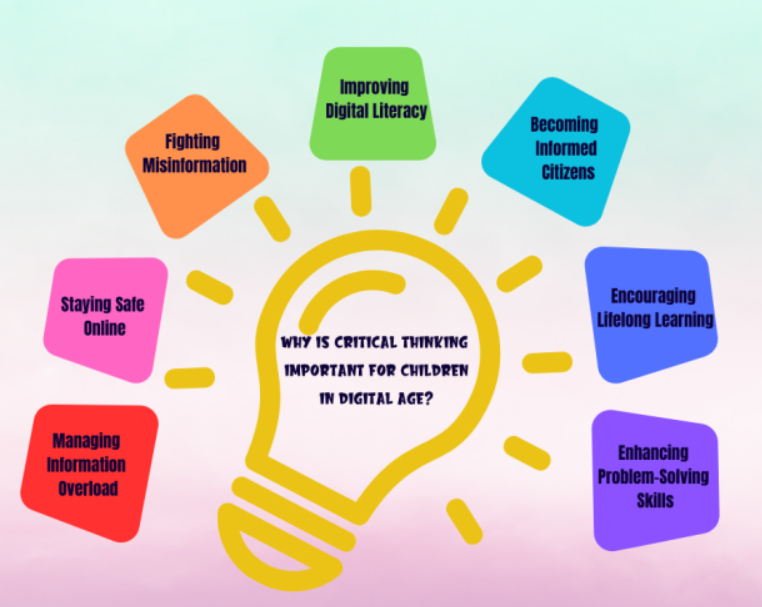
One of the biggest characteristics of the digital age is the overwhelming amount of information available online. Every day, millions of articles, videos, and posts are published across various platforms.
While this abundance of information can be valuable, it can also make it difficult to determine what is accurate and trustworthy. Without critical thinking, people may easily accept misleading or false information.
Learning how to filter and evaluate information helps individuals avoid confusion and make better judgments about the content they encounter.
The Rise of Misinformation and Fake News
Misinformation has become a major concern in the digital age. False or misleading information can spread quickly through social media platforms, online forums, and messaging apps.
Sometimes misinformation is shared unintentionally, while in other cases it may be deliberately created to influence opinions or manipulate public perception.
Critical thinking helps individuals recognize unreliable sources and verify facts before sharing information with others. Checking multiple sources and evaluating credibility are important steps in preventing the spread of misinformation.
Critical Thinking in Education
Educational systems around the world increasingly emphasize the importance of critical thinking skills. Instead of simply memorizing facts, students are encouraged to analyze information, ask questions, and develop their own perspectives.
These skills are particularly important in a digital environment where students have access to unlimited online resources.
By learning how to evaluate sources, understand context, and interpret data, students can become more independent learners and better problem-solvers.
Critical Thinking in the Workplace
Critical thinking is also highly valued in professional environments. Employers seek individuals who can analyze problems, evaluate options, and make sound decisions.
In many industries, employees must interpret complex data, identify potential risks, and develop creative solutions. Critical thinking enables workers to approach challenges logically and effectively.
As technology continues to evolve, the ability to think critically will remain a key skill for adapting to changing work environments.
How Social Media Influences Thinking
Social media platforms have become major sources of information for many people. However, these platforms often prioritize engagement and popularity rather than accuracy.
Algorithms tend to show users content that aligns with their interests and previous behavior. While this personalization can be convenient, it can also create echo chambers, where individuals are exposed mainly to opinions similar to their own.
Critical thinking allows users to recognize these patterns and actively seek diverse perspectives to develop a more balanced understanding of issues.
Developing Strong Critical Thinking Skills
Critical thinking can be developed through practice and awareness. One important step is learning how to evaluate sources of information.
Reliable sources usually provide evidence, cite references, and present balanced perspectives. In contrast, unreliable sources may rely on emotional language, lack credible evidence, or promote extreme claims.
Another important skill is distinguishing between facts and opinions. Facts are verifiable statements supported by evidence, while opinions reflect personal beliefs or interpretations.
By learning to separate facts from opinions, individuals can better assess the reliability of the information they encounter.
The Role of Curiosity and Open-Mindedness
Curiosity and open-mindedness play an important role in critical thinking. Being curious encourages individuals to explore new ideas and question existing assumptions.
Open-mindedness allows people to consider different viewpoints and adapt their understanding when presented with new evidence.
These qualities help individuals develop a more thoughtful and balanced approach to learning and decision-making.
Conclusion
In an age where information spreads rapidly across digital platforms, critical thinking has become an essential skill. It enables individuals to evaluate information, recognize misinformation, and make well-informed decisions.
By developing strong critical thinking abilities, people can navigate the digital world more responsibly and confidently. Whether in education, the workplace, or everyday life, the ability to think critically helps individuals understand complex issues and contribute more effectively to society.